Love taking your dog on walks? It’s a great time to bond. It is also a time for your dog to explore with his nose, eyes and ears.
Your main job is to keep your dog safe on those walks. You know how to watch out for other dogs, traffic and coyotes. But you also need to steer your dog from puddles and wet areas that can harbor hidden dangers that can wreak havoc on your dog’s health.
Puddle Perils
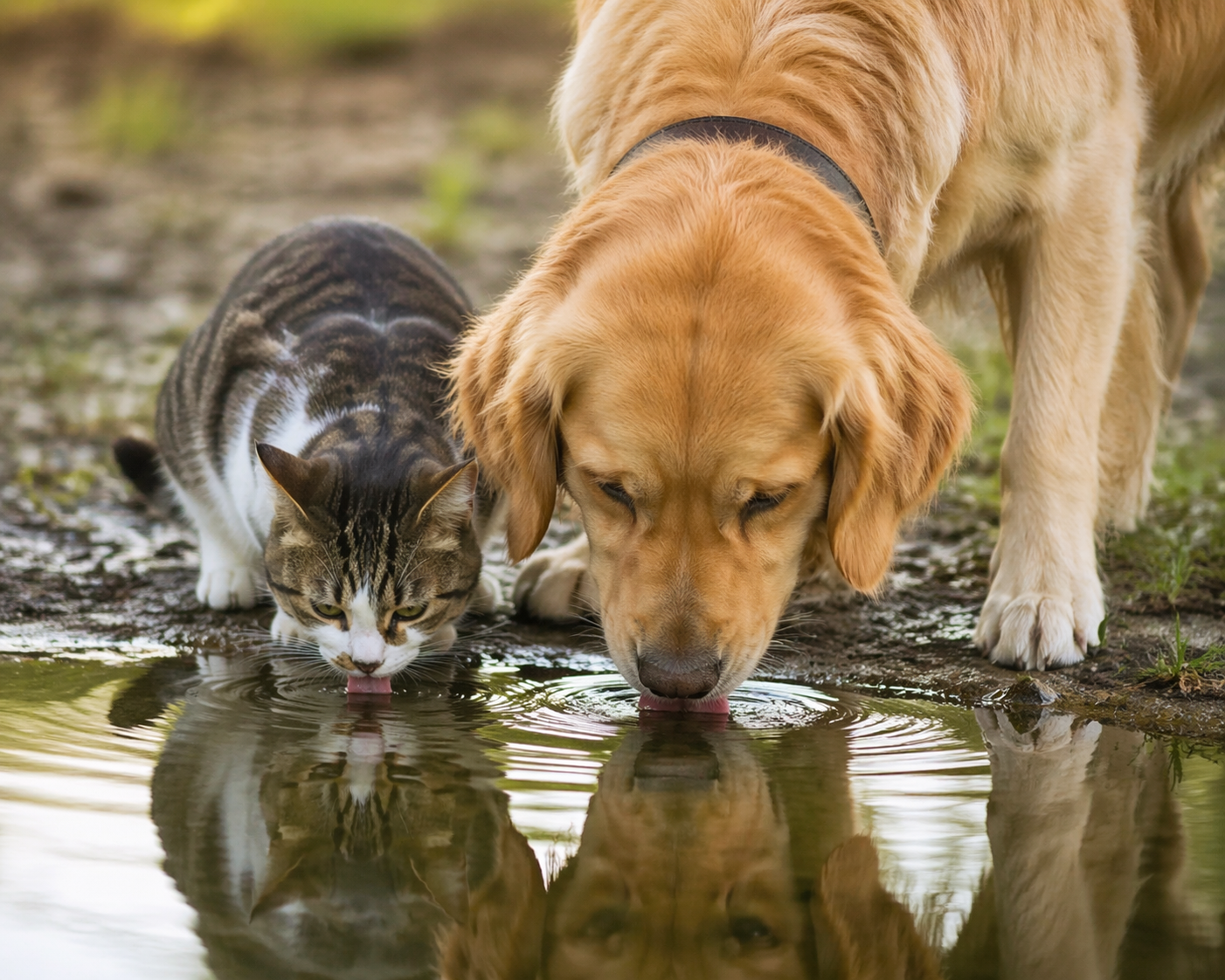
Puddles, ponds and standing water can be breeding grounds for these harmful organisms:
Leptospirosis: Contaminated urine from squirrels, skunks, opossums, deer and rats can transmit this contagious bacteria disease to dogs who walk in puddles or moist soil. That’s why it is vital to ensure your dog is up to date on his leptospirosis vaccine.
Giardia: This is a highly contagious intestinal parasite. Dogs can develop giardia by coming into contact to contaminated water, soil or feces.
Salmonella: Your dog can get these nasty bacteria from drinking stagnant puddles or gobbling up infected poop found on a walk.
Lawn Alerts
You may be careful to never apply any chemicals on your lawn that is not dog safe. But what about all your neighbors?
Be aware that their lawns may contain weed kills, fertilizers, insecticides and other toxins that you can’t see or smell. But if your dog licks the wet grass or gets his paws wet, he could react by drooling, vomiting, developing rashes on the paws or belly and even tremors.
When to Contact Your Veterinarian
Contaminated water sources can seriously impact your dog’s health. Immediately reach out to your veterinarian if your dog displays any of these signs:
Diarrhea
Vomiting
Severe drooling
Loss of appetite
Tremors or body shakes
Play It Safe
For your dog’s safety and health, bring safe bottled water from your home and a portable bowl on medium to long walks. Be on the lookout for any puddles and steer your dog around it – not through it. Then usher him to the safe water bowl in your home after you return from your walk. Also be on the lookout for any trash or food scraps your dog may try to eat on walks.
Always get into the habit of wiping and rinsing your dog’s paws after each walk to remove any toxins.
Make sure your dog is current on all necessary vaccinations to protect him.
Final Tip:
Show your cat and dog how much you care for them by enrolling in one of our Pet First Aid 4U classes. We offer three options for you to earn veterinarian-approved two-year certificates in our pet first aid/CPR programs:
In-person classes primarily aimed at pet professionals and first responders.
Interactive via ZOOM classes offered monthly and on demand
Self-paced online classes for those wishing to learn anytime, anywhere.
Pick the best option for you and sign up today!
About the Author:
Arden Moore, founder of Pet First Aid 4 U, is a Master Pet First Aid/CPR Instructor who teaches veterinarian-approved, hands-on safety courses alongside her teaching team of Kona (dog) and Casey (cat). Known as “The Pet First Aid & Safety Coach,” Arden is also a nationally recognized behavior consultant, bestselling author of over 25 pet books, and the award-winning host of the “Oh Behave!” podcast. A Fear Free Certified Professional,she brings decades of pet expertise to all her endeavors — with a mission to help pets live safer, longer and healthier lives.