Let’s See Some ID, Dog and Cat
Pet microchips are only the size of a grain of rice, but the identification information packed in those chips could greatly increase the chances of you reuniting you with your lost pet.
As America’s Pet Health and Safety Coach™, I am always teaching pet parents and pet professionals ways to keep their pets healthy and safe in my Pet First Aid 4U and pet behavior classes. Topping the list: microchips.
In sync with August 15 being touted as National Check the Chip Day, let’s dive into what microchips really are and how they work – and why all our pets need to sport them. You have questions. I have the answers.
What is a Microchip?
It is an electronic chip inside an itty-bitty glass cylinder. It does not contain a battery. When special scanners are waved over the chip, it activates radio waves to show an identification number unique to that pet.
It is not a GPS or tracking device.
What Information is Contained on the Microchip?
Microchip numbers are registered in lost pet recovery databases. Those numbers are unique to your pet as is your Social Security number. When a found dog or cat is at a veterinary clinic, shelter or other pet place, a handheld scan is moved over the shoulder area to detect the presence of a microchip ID.
What Places Have Scanners to Read Microchips?
Veterinary clinics
Animal shelters
Humane societies
Animal control centers
Animal rescue groups
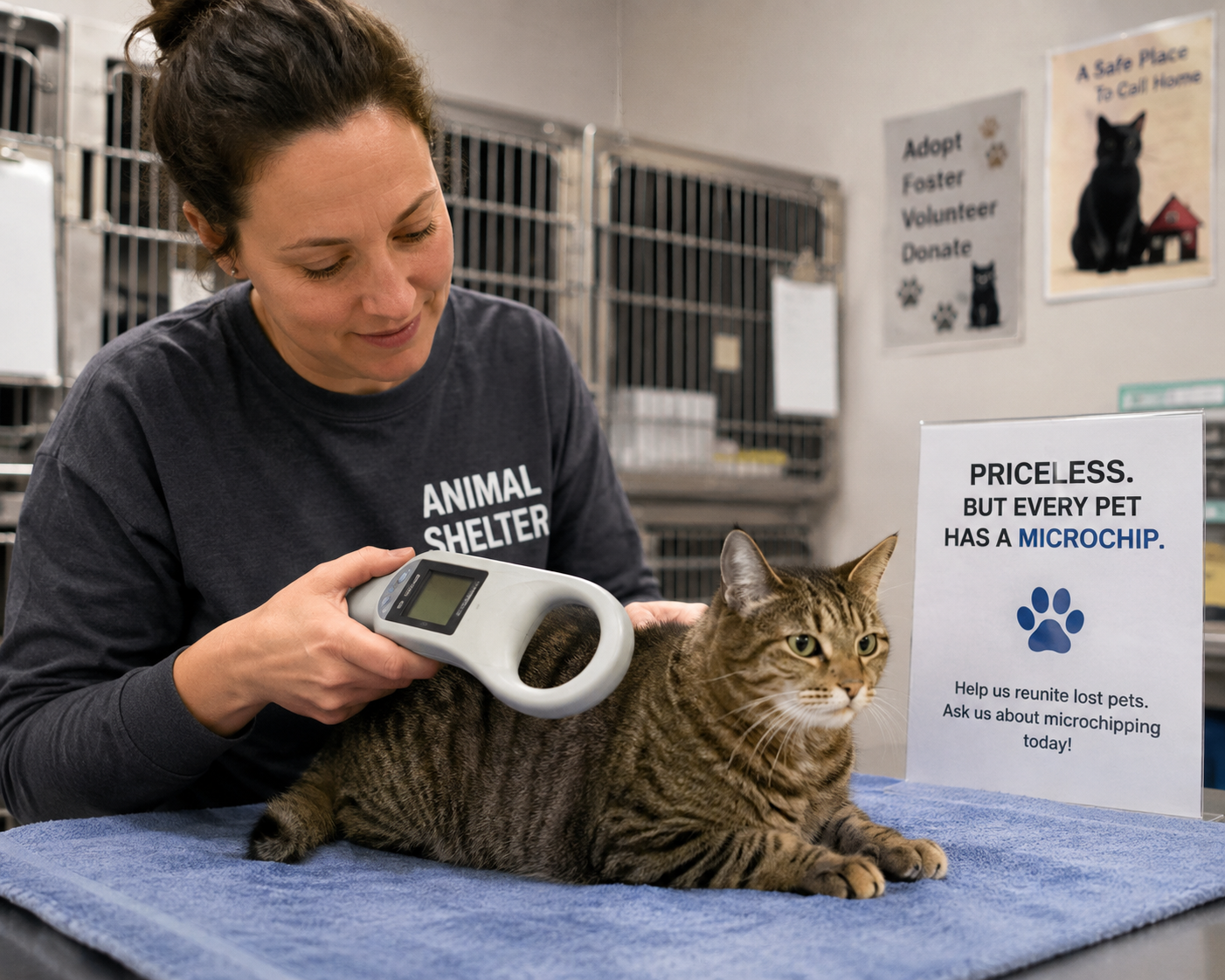
And you!
Yes, you can purchase a basic pet microchip scanner online for about $25. I keep one in my vehicle so if I find a lost dog wandering in my neighborhood who has no collar or who has metal ID tags too scratched to read, I use my scanner to get that number. I also post that dog’s photo and info on my local Next Door site in hopes his owners will see I have the dog. I have also taken lost dogs to my veterinary clinic, where they can access the contact information on the registry to reach out to the dog’s owner.
What Happens Next?
The microchip is entered into the AAHA Universal Pet Microchip Lookup Tool. It identifies which registry contains owner and veterinary clinic information on this found pet. Learn more by visiting this link: https://www.aaha.org/for-veterinary-professionals/microchip-registry-lookup-tool-aaha-find-your-pets-microchip-registry/
What Can I Do to Protect My Pet?
When you adopt a puppy, dog, kitten or cat, make sure that your veterinarian not only gives this pet a thorough medical exam and necessary vaccinations, but also inserts a microchip.
Your vet staff will use a hypodermic needle to insert the microchip under the skin, typically between the shoulders. No anesthesia or surgery is needed.
Register your name, address and veterinary clinic on the microchip registry. And, if you move, be sure to update that information. This will speed up the time to be reunited with your pet.
During annual exams, have the vet staff scan your pet’s microchip to make sure it is functioning normally.
All my pets sport microchips. They also wear collars with their names and my cell phone clearly embroidered on them.
When it comes to our pets, it is all about keeping them safe and healthy. That includes microchips.
Final Tip:
Show your dog and your cat how much you care for them by enrolling in one of our Pet First Aid 4U classes. We offer three options for you to earn veterinarian-approved two-year certificates in our pet first aid/CPR programs:
In-person classes primarily aimed at pet professionals and first responders.
Interactive via ZOOM classes offered monthly and on demand
Self-paced online classes for those wishing to learn anytime, anywhere.
Pick the best option for you and sign up today!
About the Author:
Arden Moore, founder of Pet First Aid 4 U, is a Master Pet First Aid/CPR Instructor who teaches veterinarian-approved, hands-on safety courses alongside her teaching team of Kona (dog), Nova (dog) and Casey (cat). Known as “The Pet First Aid & Safety Coach,” Arden is also a nationally recognized behavior consultant, bestselling author of over 25 pet books , and the award-winning host of the “Oh Behave!” podcast, A Fear Free Certified Professional, she brings decades of pet expertise to all her endeavors — with a mission to help pets live safer, longer and healthier lives.