I adopted Nova 6 Toes about a year ago from the East Lake Pet Orphanage in Dallas. I fell in love with everything about her: the quiet way she surveys her surroundings, the fact she has 20 different dog breeds, her ability to learn quickly and her respect for cats. She has become a welcomed addition to our Pet First Aid 4U teaching team that includes Pet Safety Dog Kona and Pet Safety Cat Casey.
The one challenge? Nova 6 Toes sports two extra nails on each back paw and her nails are black and long. Raise your paw, er, hand if you share your life with a dog with black nails. These nails can be challenging to trim because you cannot see the quick - that pink part inside the nail that contains blood vessels. If you clip the quick, it will cause bleeding and pain.
Working with professional dog groomers and veterinary technicians, I have been able to reduce Nova’s fear and outright resistance to having her toes touched and her nails trimmed. Patience has paid off.
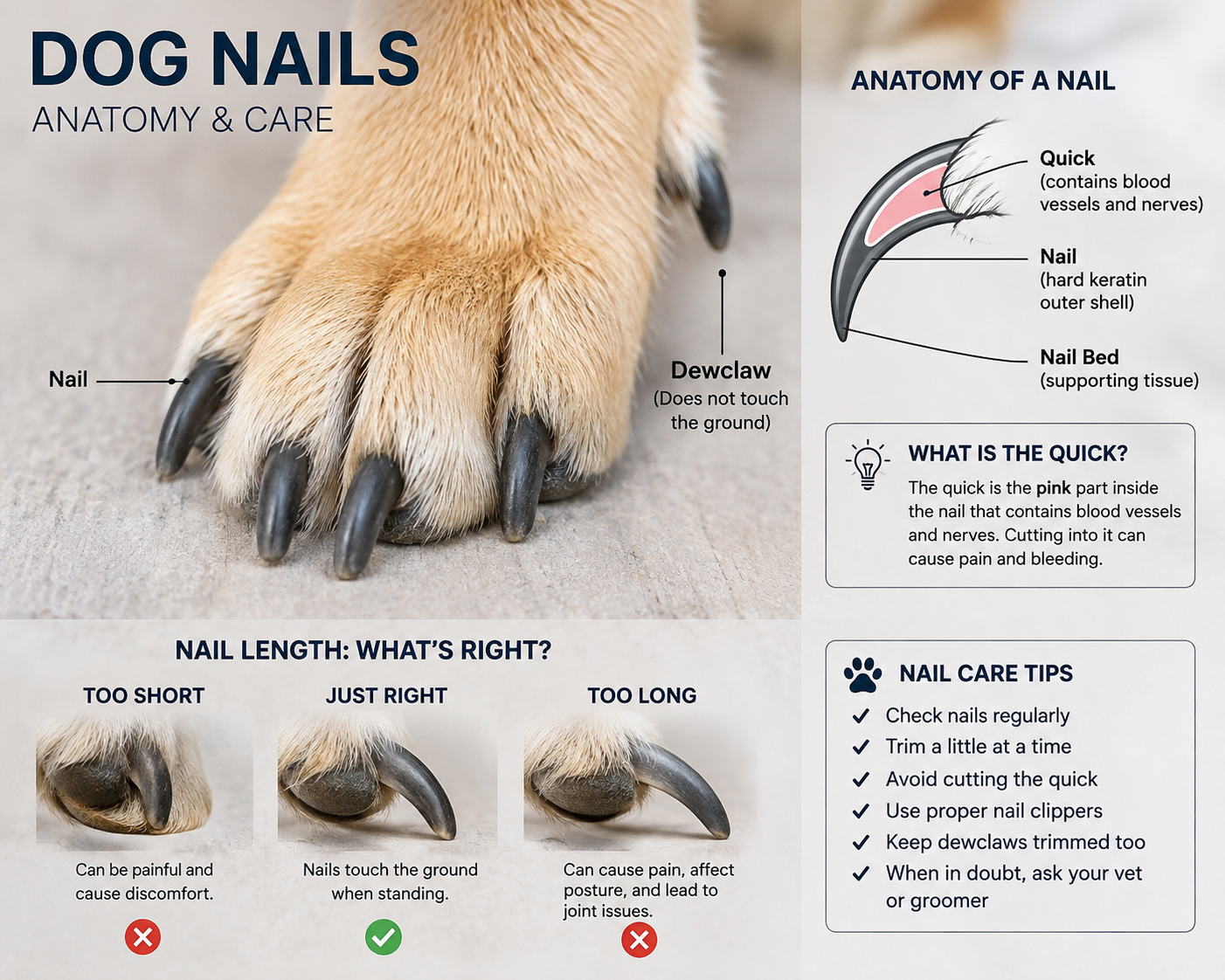
Dogs Use Their Nails To:
Maintain balance
Grip the floor or ground to be able to run, turn and climb
Dig dirt, grass and other surfaces
Communicate, as scratching leaves scent and visual marks read by other dogs
Signs of Nail Issues
In our Pet First Aid 4U classes, we address nail health in our head-to-tail wellness assessment exercises. We educate pet professionals and pet parents to look for these signs of a nail problem:
Nails that are cracked or dangling. The nail can catch on carpeting or rugs and tear.
Overgrown nails
Bleeding nails
A dog excessively chewing or licking at a nail
A dog limping or not putting weight on a paw
Smelling a foul odor from the nails
Nail Care Tips
All dogs need trimmed nails. But some dogs are sensitive to having their paws touched. My nail tips include:
Go slowly. Start by touching a paw and then releasing and handing over a treat to build a positive experience.
Select the right tools: a nail grinder or nail clippers made for dogs, not people.
Keep styptic power on hand to stop a bleeding nail.
Pick the ideal time. Aim to trim nails when your dog has exercised or is relaxed and never when he is excited or anxious.
Reward often with praise and treats or offering mini play time with your dog’s favorite toy.
Stage mini-groom sessions. Don’t let your dog’s stress level rise. You may need to conduct several nail-trimming sessions to get all of the nails on the front and back paws.
Know when to seek help. If your dog acts too panicky or growls at you, book nail-trimming appointments with professional pet groomers or veterinary staff.
Final Tip:
Show your dog and your cat how much you care for them by enrolling in one of our Pet First Aid 4U classes. We offer three options for you to earn veterinarian-approved two-year certificates in our pet first aid/CPR programs:
In-person classes primarily aimed at pet professionals and first responders.
Interactive via ZOOM classes offered monthly and on demand
Self-paced online classes for those wishing to learn anytime, anywhere.
Pick the best option for you and sign up today!
About the Author:
Arden Moore, founder of Pet First Aid 4 U, is a Master Pet First Aid/CPR Instructor who teaches veterinarian-approved, hands-on safety courses alongside her teaching team of Kona (dog), Nova (dog) and Casey (cat). Known as “The Pet First Aid & Safety Coach™,” Arden is also a nationally recognized behavior consultant, bestselling author of over 25 pet books , and the award-winning host of the “Oh Behave!” podcast, a Fear Free Certified Professional, she brings decades of pet expertise to all her endeavors — with a mission to help pets live safer, longer and healthier lives.