We often admire our dogs for their athleticism, speed and agile moves. But here’s the reality check: Dogs are not invincible to serious leg injuries.
In fact, up to 85 percent of all knee and orthopedic issues in dogs are cruciate ligament damage, according to veterinarians. I found out that directly when my terrier mix Kona, better known globally as “Pet Safety Dog Kona,” greeted me one recent morning with a limp and the desire to not put any weight on her back right leg.
X-rays and a thorough physical exam by an orthopedic surgeon confirmed the diagnosis: Kona ruptured her cruciate ligament and required prompt surgery to prevent further damage to the leg and to her mobility.
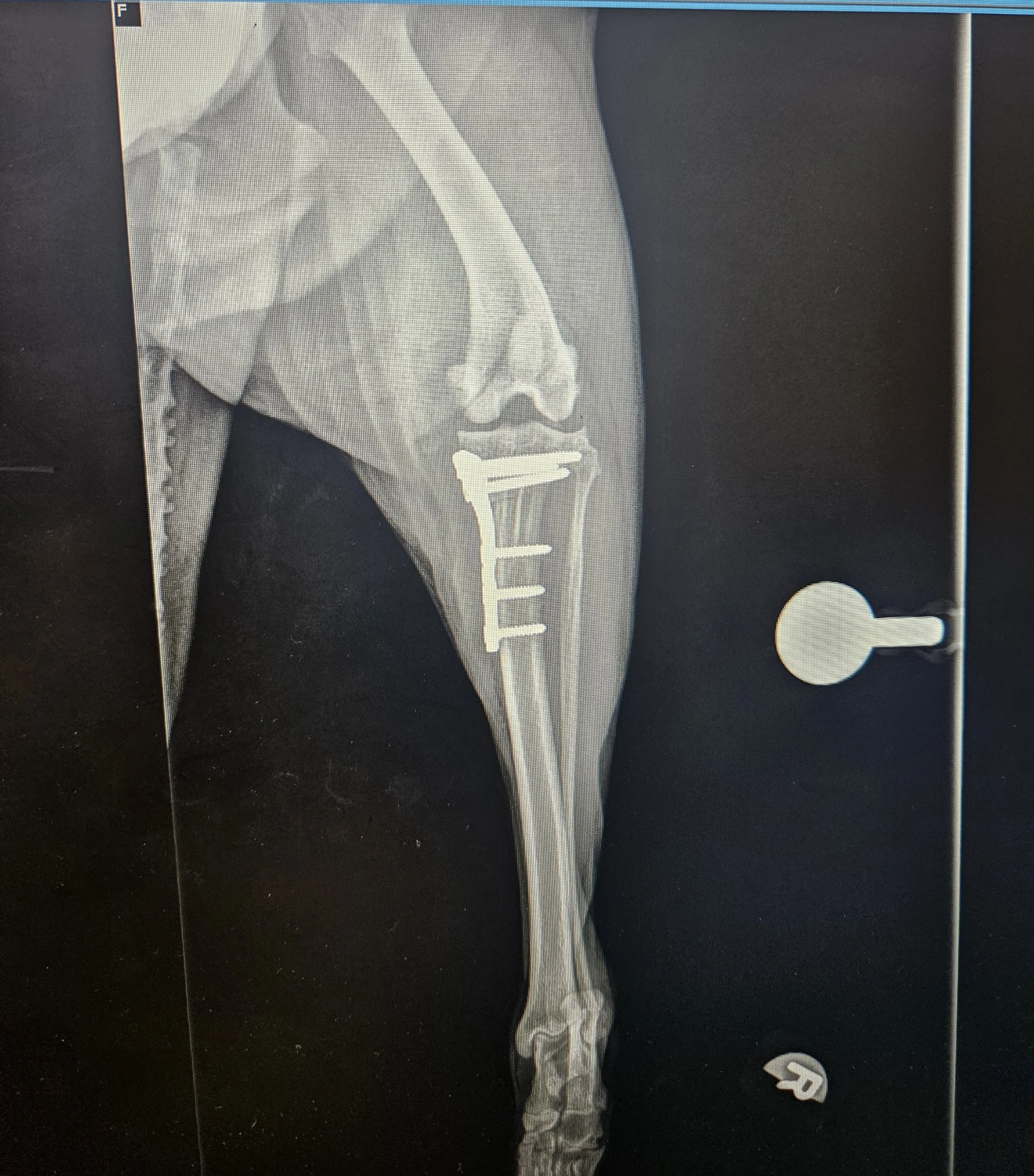
Pet Safety Dog Kona’s leg x-ray, post cruciate ligament surgery.
Signs of a Torn ACL in Dogs:
Sudden limping
Shifting weight to the front paws to compensate for the injured back leg
Swelling and warmness around the impacted knee joint
Reluctance to walk up or down stairs, get into the car or go on a walk
Risk Factors for Torn ACL in Dogs:
Size. Mastiffs, Rottweilers, Labrador retrievers and other large breeds, carry a lot of weight on their legs. This makes them more prone to ligament ruptures than toy breeds, such as Chihuahuas or Shih Tzus.
Age. Middle-aged to senior dogs are more at risk than young adult dogs.
Weight. Dogs who are overweight or even obese are at higher risk for torn ACLs.
In my Pet First Aid 4U classes, we address leg injuries in dogs. In fact, I created a makeshift way to help safely move dogs with serious leg injuries.
For years, I have demonstrated how to take a large bath towel, fold it in half and then roll a long leash inside it. It looks like a flexible pool noodle with the ends of the leash dangling on each side to use as a comfortable makeshift sling. Kona was and continues to be my willing demo dog for this exercise. But we put this towel sling to practical use in the days after her surgery to guide her safely to go to the bathroom outside and to her food bowl.
This leash-inside-a-towel technique is part of my “Muttgyver” program that uses everyday items to aid injured pets and safely transport them to veterinary clinics.
Post-Surgical Recovery Tips
Kona underwent a two-hour surgery in which metal plates and screws were inserted in her back right leg to provide her with stability and mobility. Please heed the detailed instructions provided by your veterinary surgeon to ensure your dog has complete recovery.
Here are some tips:
Confine your dog. If your dog is crated trained or is calm inside an x-pen, usher your dog inside to allow them to be calm and sleep.
Create a prescription daily checklist for family members to ensure your dog receives the needed medications at the right time and at the right dose.
Provide plenty of water to keep your dog hydrated.
Following the veterinarian’s instructions to first apply cool compresses and followed 48 hours later with warm compresses to the surgical site.
Use a commercial sling or my Muttgyver towel option to guide your dog outside for potty breaks.
Tether your dog to a long leash attached to a coffee table in the living room when the family gathers to watch TV. Place your dog on an orthopedic bed. She will appreciate being with the family.
Supervise interactions from other pets in the family. Keep things calm. Each of our pets, including Rusty, our orange tabby, gently sniffed Kona and gave her kisses when she came home from the veterinary hospital.
Book an appointment for rehabilitation for your dog about two to three weeks after surgery. This trained staff will customize a recovery plan for your dog.
Go slow. It takes about 10 to 12 weeks for recovery, so do not make plans for your dog to take her usual long daily walk for three months. Build up the distance slowly.
I am happy to report that Kona is making steady progress and her smile is back. She is putting full weight on her back leg and definitely appreciates our cuddle sessions.
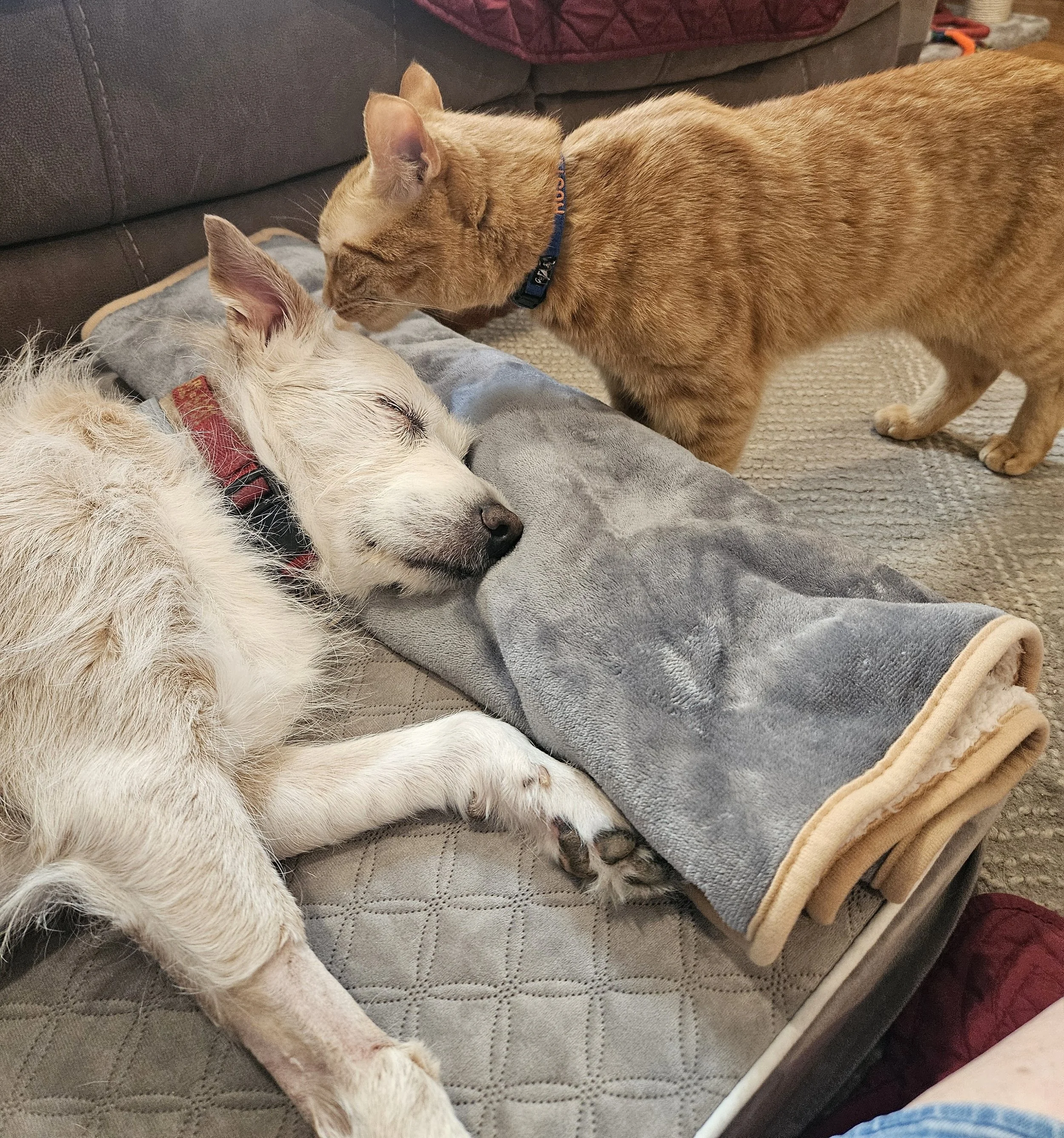
Kona getting “get well” kisses from Rusty
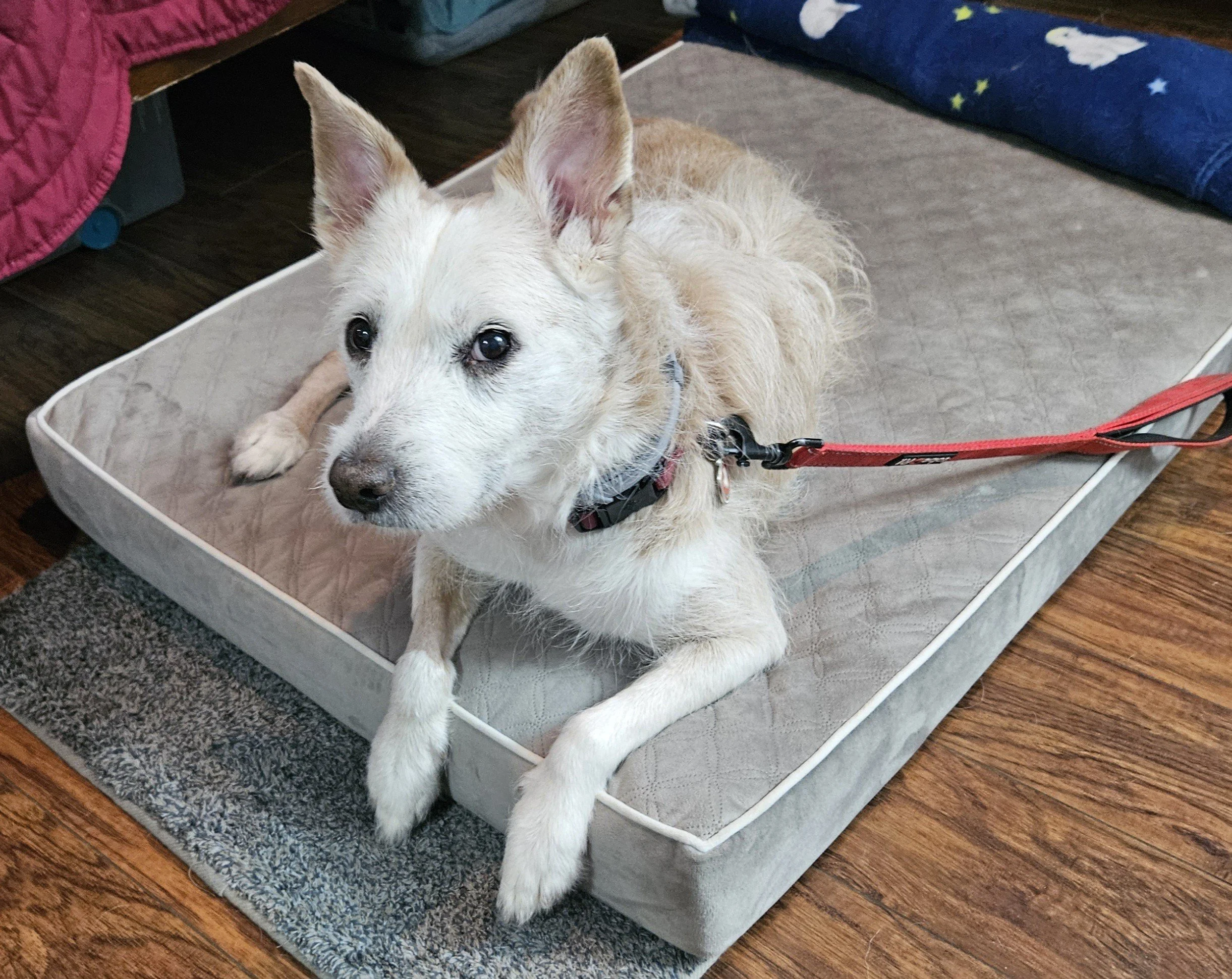
Kona enjoying her recovery on an orthopedic bed.
Final Tip:
Show your dog and your cat how much you care for them by enrolling in one of our Pet First Aid 4U classes. We offer three options for you to earn veterinarian-approved two-year certificates in our pet first aid/CPR programs:
In-person classes primarily aimed at pet professionals and first responders.
Interactive via ZOOM classes offered monthly and on demand
Self-paced online classes for those wishing to learn anytime, anywhere.
Pick the best option for you and sign up today!
About the Author:
Arden Moore, founder of Pet First Aid 4 U, is a Master Pet First Aid/CPR Instructor who teaches veterinarian-approved, hands-on safety courses alongside her teaching team of Kona (dog) and Casey (cat). Known as “The Pet First Aid & Safety Coach,” Arden is also a nationally recognized behavior consultant, bestselling author of over 25 pet books, and the award-winning host of the “Oh Behave!” podcast. A Fear Free Certified Professional,she brings decades of pet expertise to all her endeavors — with a mission to help pets live safer, longer and healthier lives.