Dishing Up Safe Food Advice for Your Pets
Like to cook? Enjoy trying new foods? Before you consider sharing anything edible with your dog or cat, do a safety check.
Some items we may love to consume can cause digestive upset – or even death in your pet. As the founder of Pet First Aid 4U, I make it my mission to educate my students on ways to avoid accidental poisoning in their dogs and cats. I also share pet safety food concerns in talks I present at pet events and on pet podcasts.
Here is just a rundown of human-safe foods and drinks that are no-no’s to dish up to pets:
Grapes
Raisins
Macadamia nuts
Chocolate, especially dark
Sugar-free items like some peanut butter versions
Onions
Pumpkin pie filling
Yeast dough
Alcohol
Caffeinated drinks like coffee
Depending on the size and health of your pet and the amount consumed, ingesting any of these edibles can cause vomiting, diarrhea, breathing difficulties, seizures, damage to organs like kidney, anemia and other serious issues.
Practice Prevention
I share my household with three dogs and two cats who do their best to charm me when I am prepping meals in the kitchen. I keep foods in containers, in cabinets and in my refrigerator – out of paw’s reach.
I also hang out in the kitchen when food is cooking in pans to prevent any of my four-leggers from accessing the contents of a hot pan that can also result in them getting burned by grease or hot oils.
On leashed walks in my neighborhood and elsewhere, I keep the leash length to less than six feet so I can reel in any of my dogs before they have the opportunity to do a nosedive into a discarded container of food or opened garbage bag. I offer them small healthy dog treats for sitting nicely during the outing. Again, think safety first.
Definitely have a game plan for everyone in your household in advance on what to do if your pet eats or drinks something potentially poisonous.
Seek Veterinary Help Immediately
Start by posting the ASPCA Poison Control Hotline toll-free number on a visible place like your refrigerator door. This hotline is staffed 24-7 by board-certified veterinary toxicologists who can walk you through what to do. That number is 888-426-4435. Also, keep your veterinary clinic number in your phone contacts as well.
As I train my pet first aid students, gather any vomit or diarrhea your pet expels in a plastic baggy. Bring it with you to the vet visit so it can be properly examined and analyzed. What you think your dog or cat may have eaten may be in the contents. But there could be another type of poison in it as well. Always call the clinic ahead so that the veterinary team can be ready to treat your sick pet quickly.
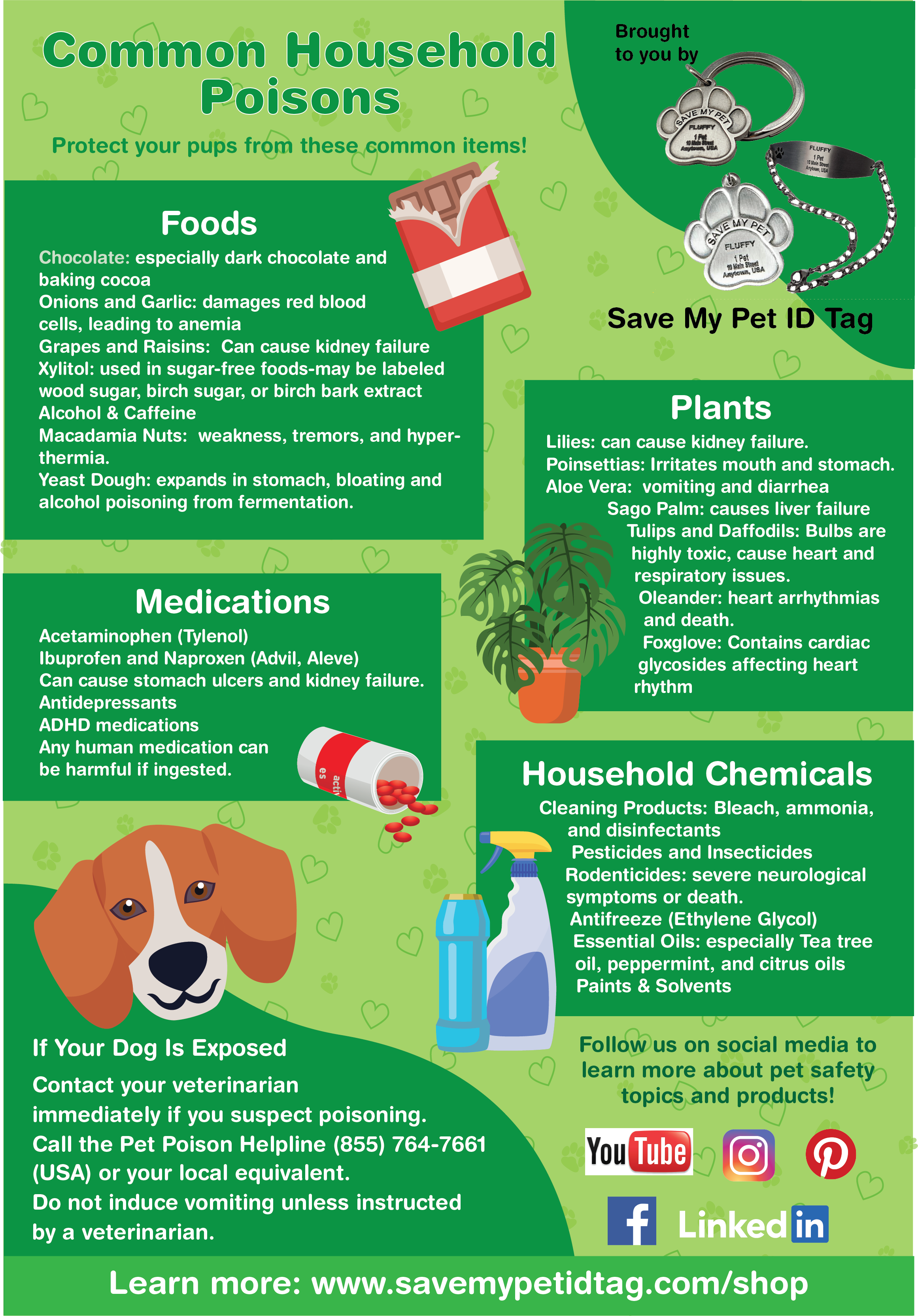
Make it stand out
Check out this infographic created by our friends at Save My Pet ID.
They identify foods, plants, medications and household chemicals that can harm our pets.
Final Tip:
Show your cat and dog how much you care for them by enrolling in one of our Pet First Aid 4U classes. We offer three options for you to earn veterinarian-approved two-year certificates in our pet first aid/CPR programs:
In-person classes primarily aimed at pet professionals and first responders.
Interactive via ZOOM classes offered monthly and on demand.
Self-paced online classes for those wishing to learn anytime, anywhere.
Pick the best option for you and sign up today!
About the Author:
Arden Moore, founder of Pet First Aid 4 U, is a Master Pet First Aid/CPR Instructor who teaches veterinarian-approved, hands-on safety courses alongside her teaching team of Kona (dog) and Casey (cat). Known as “The Pet First Aid & Safety Coach,” Arden is also a nationally recognized behavior consultant, bestselling author of over 25 pet books, and the award-winning host of the “Oh Behave!” podcast. A Fear Free Certified Professional, she brings decades of pet expertise to all her endeavors — with a mission to help pets live safer, longer and healthier lives.